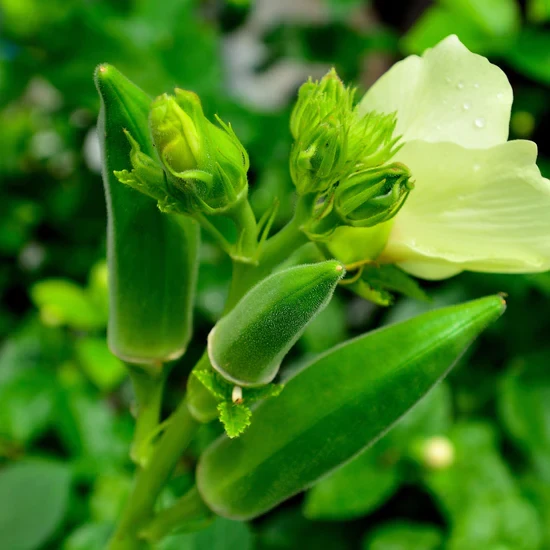
Okra
$6.00
Heat-loving okra thrives in the intense Owens Valley sun. This Southern staple is incredible fried in cornmeal, grilled whole, roasted until crispy, or simmered in gumbo and curry.
Growing Tips
Okra is one of the most heat-tolerant vegetables and absolutely loves our Big Pine summers. Direct sow after soil reaches 65°F or start indoors. Soak seeds overnight before planting to speed germination. Harvest pods at 3-4 inches — they get tough fast. Check and pick every other day during peak production. Wear long sleeves when harvesting — okra plants have tiny spines that can irritate skin. The flowers are gorgeous and edible.
Owens Valley only. Pickup in Big Pine or local delivery.
Varieties We Carry
- •Clemson Spineless, Emerald, Burgundy, and other okra selections)
More Other Vegetables
Eggplant
Beautiful, versatile eggplant with glossy purple skin and creamy flesh. A staple of Mediterranean, Middle Eastern, Asian, and Southern cooking — grilled, roasted, fried, or turned into baba ganoush. Varieties may include: Black Beauty, Ichiban, Rosa Bianca, and other eggplant selections. Growing tips: Eggplant needs heat, heat, and more heat — and Big Pine delivers. Plant after soil is thoroughly warm (late May/early June). They love our hot days and respond well to consistent watering and feeding. Harvest when skin is glossy and flesh gives slightly to pressure. Overripe eggplant becomes seedy and bitter — smaller is generally better. Flea beetles are the main pest; row cover early in the season helps.
Tomatillos
The essential ingredient for authentic salsa verde, green enchilada sauce, and Mexican cuisine. Tomatillos are prolific producers wrapped in papery husks — each plant delivers pounds of tangy green fruits. Growing tips: Plant at least two tomatillo plants — they need cross-pollination for good fruit set. They are easier than tomatoes and more pest-resistant. In our climate, they thrive with minimal fuss. Fruits are ready when they fill and split their papery husk. Remove husks and rinse off the sticky coating before using. Roasted tomatillos + jalapeños + garlic + cilantro + lime = the best salsa verde you have ever had. Plants often self-sow, giving you free tomatillos next year.